
Flanges for hyperscale data centers
A hyperscale campus uses the same flanges as any data center, in far larger numbers and sizes, repeated building after building. This page sets out what changes at that scale, system by system, and how to specify and buy flanges for it.
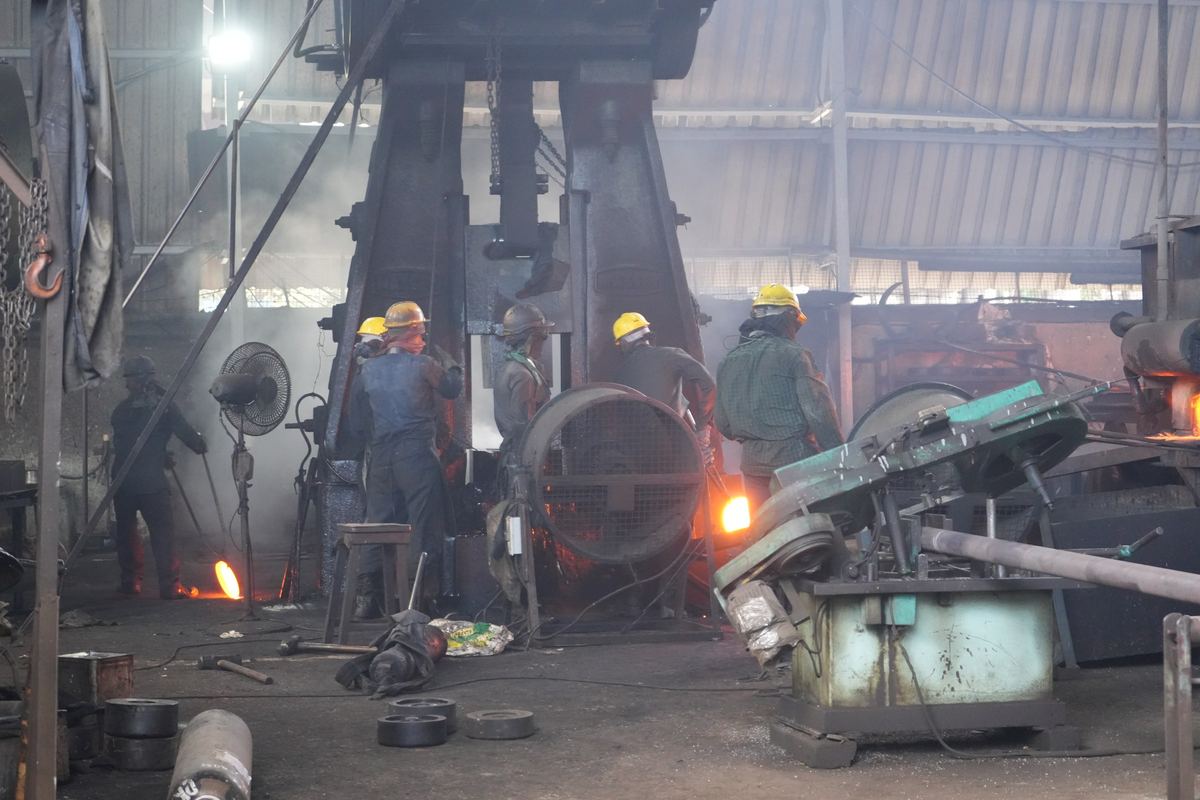
A hyperscale campus uses the same flanges as any data center, in far larger numbers and sizes: A105 Class 150 flanges on the chilled and condenser water plant, ASME B16.47 or AWWA C207 flanges on mains above 24 inches, and 316L weld neck, lap joint and blind flanges on the CDUs and technology cooling loops of the AI halls. What changes is the scale of the order: one specification repeated across buildings and phases, blind flanges for every future connection, and a certificate for every heat.
What makes a data center hyperscale
There is no official definition. Vertiv's rule of thumb is more than 5,000 servers and 10,000 square feet, and the term usually means a facility run by, or built for, one of the hyperscale cloud and AI companies: Amazon, Google, Microsoft, Meta, Oracle and their peers. Synergy Research Group counted 1,360 hyperscale data centers worldwide at the end of 2025, with 48% of the world's data center capacity, and expects hyperscale operators to hold 67% by 2031.
The unit of construction has changed too. New AI campuses are planned at hundreds of megawatts to a gigawatt and built as a series of near-identical buildings, each with its own plant and data halls, delivered phase by phase.
How hyperscale campuses are cooled
| System | What it does | Flanges |
|---|---|---|
| Heat rejection | Cooling towers, or dry coolers and air-cooled chillers on closed loops | A105 Class 150; flat face at FRP towers and cast iron pumps; condenser water |
| Chilled water plant and facility water | Chillers, pumps and mains to the halls and CDUs, often NPS 24 and larger | A105 Class 150 weld neck or slip-on; ASME B16.47 or AWWA C207 above NPS 24 |
| CDUs | Separate the facility water from the coolant loop and pump it to the racks | Stainless or A105 on the primary side; 316L on the secondary |
| Technology cooling system | Headers, row manifolds and rack branches to the cold plates | F316L weld neck bored Sch 10S, lap joint with stub end, blind; TCS flanges |
| Future connections | Header ends and branches left for later halls and racks | Blind flanges in the line's class and material |
AI halls change the balance. Racks of the NVIDIA GB200 and GB300 NVL72 class run at 132 to 142 kW in Vertiv's and Schneider Electric's reference designs, far beyond what air can remove, so most of their heat goes through CDUs into stainless technology cooling loops built like clean process piping. The plant behind them still needs large carbon steel mains, often fed by closed loops and dry coolers rather than open cooling towers.
An AI hall in flanges
Our CDU to rack piping guide counts the parts in a pod of twenty 142 kW racks served by four 1,350 kW CDUs: about 130 flanges, 110 elbows, 50 tees and 50 valves between the CDUs and the racks. Nearly two thirds of those flanges are NPS 2 (DN 50) weld necks at the rack branches, four for every rack.
| AI capacity | Pods of that size | Flanges, CDUs to racks |
|---|---|---|
| 10 MW hall | About 4 | About 450 |
| 30 MW hall | About 11 | About 1,400 |
| 100 MW building | About 35 | About 4,500 |
These are orders of magnitude, not a take-off: rack density, the CDU size and how much is left for growth all move the count. They show where the volume is. A hyperscale order is dominated by a few sizes repeated thousands of times, so consistent bores, marking and certificates across every lot matter more than any single flange.
Buying flanges for a campus
- One specification, every phase. Fix the standard, class, face, bore and grade for each size once, and order every phase against the same line list. Our drawings give each size a drawing code to quote.
- Mixed sizes, mixed phases. Small mixed orders are welcome, so a later phase or a change can be ordered as a few lines of each size.
- Traceability at volume. Every flange carries its heat and lot number, and every heat comes with an EN 10204 3.1 certificate (3.2 on request); see our mill test certificate.
- Inspection. Third-party inspection by TÜV, Gulf Lloyds, IRClass, BV or SGS can be arranged at our works before dispatch.
- Complete packages. Flanges, butt weld fittings and pipe in the same grade can be supplied together, so one set of certificates covers a system.
- Clean stainless. Stainless flanges for the AI halls can be pickled and passivated to ASTM A380 and A967.
Hyperscale data centers in India
Hyperscale facilities are the largest part of India's data center capacity. Savills India counts 1.8 GW of operational IT capacity in the first half of 2026, 36% of it in hyperscale facilities and another 55% in facilities serving both hyperscale and enterprise customers; 258 MW was added in that half year alone, 59% more than a year before. The largest single project is Google's AI hub at Visakhapatnam, planned at nearly 1 GW, where construction began in April 2026.
| City | Why it matters for the piping |
|---|---|
| Mumbai | The largest market; coastal air, the first direct-to-chip deployment at CLDC Mumbai 01 |
| Chennai | Subsea cable landings and large campuses on a humid coast |
| Hyderabad | Hyperscale cloud regions and fast-growing AI capacity |
| Visakhapatnam | Google's AI hub, nearly 1 GW at one location |
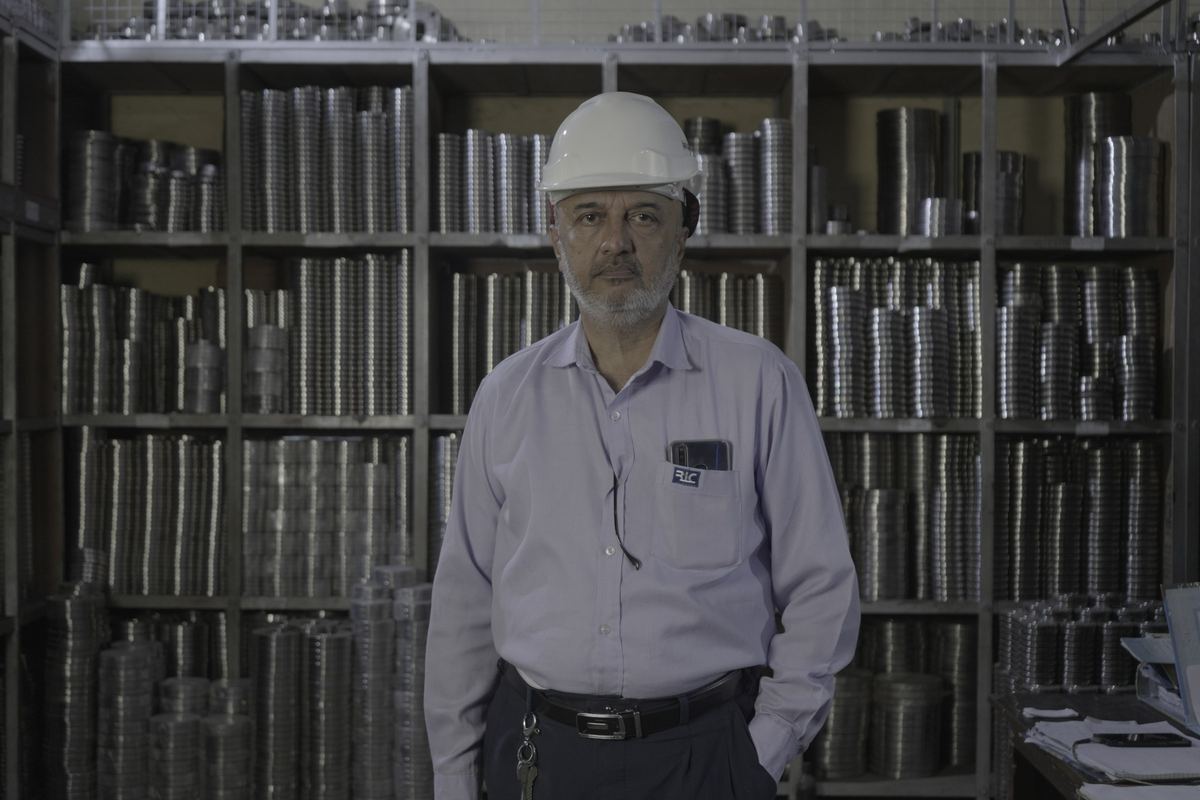
Flanges for Indian campuses go by road from our works in Umbergaon, Gujarat. The specification by city, with climate and water conditions, is on our India data center pages.
Frequently asked questions
What is a hyperscale data center?
A very large data center run by, or built for, one of the hyperscale cloud and AI companies such as Amazon, Google, Microsoft or Meta. There is no official threshold; Vertiv puts it at more than 5,000 servers and 10,000 square feet, and new campuses are planned in hundreds of megawatts to a gigawatt.
Do hyperscale data centers need special flanges?
No special standard: the same ASME B16.5, ASME B16.47, AWWA C207 and EN 1092-1 flanges as any data center, in larger sizes and numbers. What changes is the buying: one specification repeated across buildings, phased deliveries, and certificates and inspection for every heat.
Which flange material suits the AI halls of a hyperscale campus?
ASTM A182 F316L or F304L stainless steel, pickled and passivated, on the CDUs and technology cooling loops; A105 carbon steel on the chilled water and condenser water plant, with stainless where the facility water to the CDUs is built in stainless.
How many flanges does a hyperscale AI hall need?
Hundreds per megawatt on the liquid cooling side alone. Our sample pod of twenty 142 kW racks has about 130 flanges between its CDUs and racks, so a 30 MW hall built from pods like it needs well over a thousand, before counting the plant and the facility water mains.
Can you supply a campus in phases?
Yes. We make each phase to the same drawings and line list, and small mixed orders are welcome, so a later phase can be ordered as a few lines of each size.
Sources
- Synergy Research Group, Hyperscale Operators to Account for 67% of all Data Center Capacity by 2031, 7 April 2026 (1,360 hyperscale data centers at the end of 2025, 48% of capacity)
- Vertiv, What is a hyperscale data center? (5,000 servers and 10,000 square feet as a rule of thumb; read 1 November 2026)
- Vertiv, news releases on its reference designs for the NVIDIA GB200 NVL72 (17 October 2024, up to 132 kW per rack) and GB300 NVL72 (11 June 2025, 142 kW per rack); Data Center Dynamics on Schneider Electric's GB200 NVL72 reference design (up to 132 kW per rack)
- Savills India, as reported by Indian Infrastructure, 22 July 2026 (1.8 GW operational, 36% hyperscale, 258 MW added in H1 2026)
- Bharti Airtel, April 2026, on Google's AI hub at Visakhapatnam (US$15 billion, nearly 1 GW)
- RIC, sample bill of quantities in the CDU to rack piping guide, and the counts scaled from it