
Flanges by type
Slip-on flanges for data center water mains
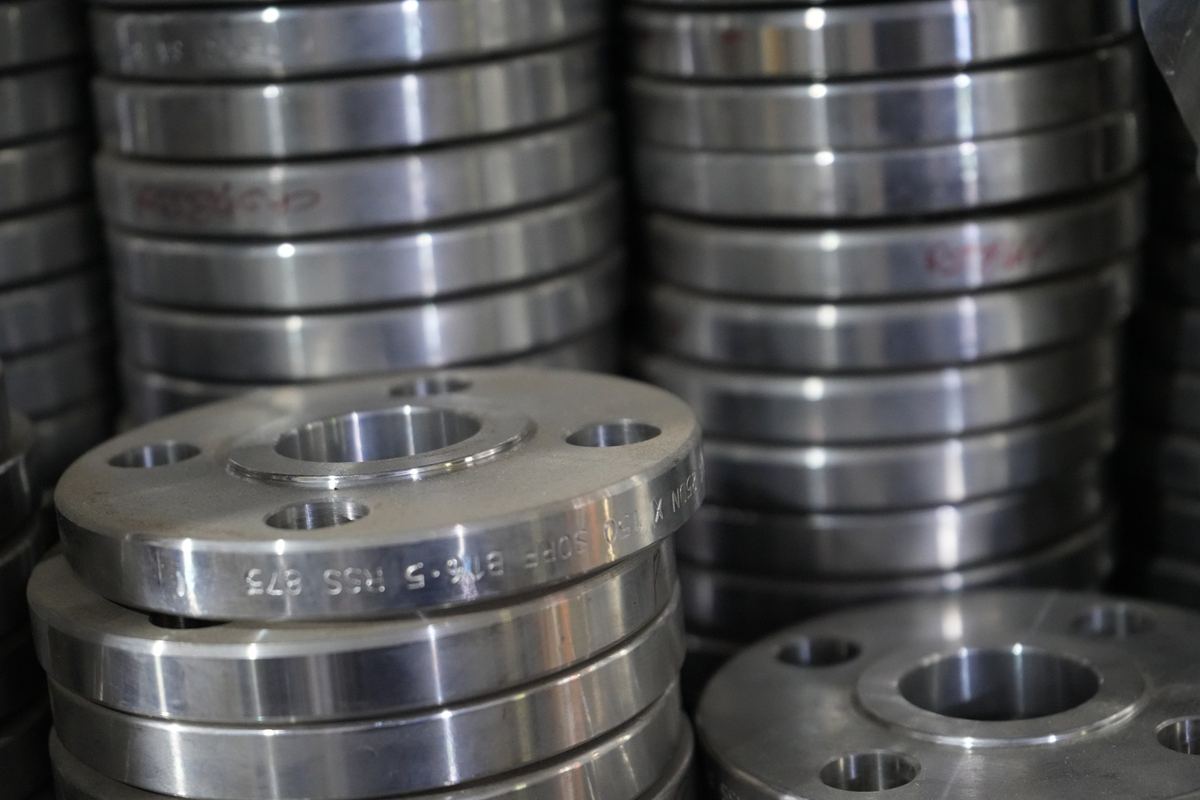
A slip-on flange slides over the pipe and is fillet welded inside and out. It costs less than a weld neck and is easier to align, which makes it the workhorse on carbon steel chilled water and condenser water mains.
Use slip-on flanges on carbon steel chilled water and condenser water mains where the piping specification allows fillet-welded flanges. Use weld necks instead at pumps, on stainless clean loops and wherever the specification asks for butt welds.
Slip-on or weld neck
| Factor | Slip-on | Weld neck |
|---|---|---|
| Flange cost | Lower | Higher |
| Fit-up | Easy; pipe cut length less critical | Needs accurate cut and bevel |
| Welds | Two fillet welds | One butt weld |
| Strength and fatigue life | Lower | Higher |
| Bore | Step and internal fillet weld | Smooth, continuous |
| Best data center use | Carbon steel CHW and CW mains | TCS, CDU, pumps, chillers |
Hubbed and plate slip-ons
ASME B16.5 slip-on flanges have a short hub. European projects often use EN 1092-1 Type 01 plate flanges, which are flat plates without a hub, and Type 12 hubbed slip-ons. Large water mains use plate ring flanges to AWWA C207. We make all of these.
Wafer and lug butterfly valves are common on chilled water. Check that the valve disc clears the flange bore and the pipe when it opens. Valve makers publish compatible flange and pipe schedules.
Frequently asked questions
Are slip-on flanges allowed on chilled water piping?
Building services piping codes such as ASME B31.9 permit slip-on flanges, and they are common on carbon steel chilled and condenser water. Some project specifications require weld necks at pumps or on all sizes, so check the piping specification first.
How is a slip-on flange welded?
With two fillet welds: one outside at the hub and one inside at the bore, set back from the flange face so the gasket surface is not damaged.
Should slip-on flanges be used on the TCS loop?
Usually not. The inside fillet weld forms a crevice that is hard to clean and to purge during welding. Weld neck or lap joint flanges are preferred on clean secondary loops.